
Manos Y Cuentas
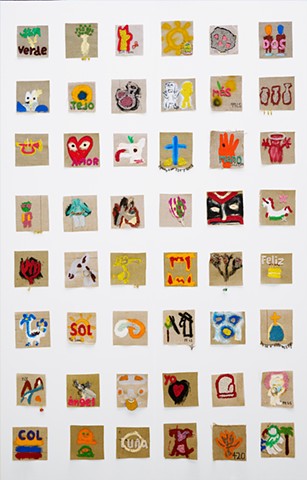

Manos y Cuentas (Hands and Beads)
Joshua Searle
8-29 August 2026, Alta Forma
Manos y Cuentas (Hands and Beads) draws inspiration from the more than 300-year history of beading in Colombia. Most notably associated with the Emberá Chamí people, the tradition emerged through the use of seeds, stones, shells, and natural fibres before evolving to incorporate glass beads introduced through colonial trade. Today, beading remains embedded within daily life across Colombia, where intricate hand-crafted works can still be found on city streets, market stalls, and in Indigenous communities throughout the country.
For this exhibition, Joshua Searle turns toward these histories as a point of departure rather than replication. Across a series of intimate works, fragments of linen are painted and adorned with small objects drawn from personal memory. Unlike traditional beadwork, these elements are not sewn but glued into place—a subtle acknowledgement of contemporary convenience and the accelerated pace of modern life. Some works incorporate bells, charms, and found objects, becoming small offerings that record moments, relationships, and experiences. Together, they function as personal artefacts, carrying traces of both remembrance and invention.
Alongside these works stands a monumental ceramic necklace. Where the beaded works operate at a miniature scale, the necklace enlarges the form dramatically, replacing glass beads with hand-built terracotta elements the size of a human hand. Though differing in scale, both bodies of work share an interest in making, collecting, and transforming humble materials. The terracotta beads evoke Colombia’s long ceramic traditions, while their origins are distinctly contemporary: formed from clay left over from a previous project and strung together using a Colombian coffee sack gifted by a friend.
Throughout Manos y Cuentas, Searle pieces together fragments of history, memory, and material culture in an attempt to bridge inherited traditions and contemporary experience. The works are neither faithful reproductions nor acts of mastery. Instead, they embrace admiration, mimicry, and imperfection, acknowledging a distance between the artist and the traditions that inspire him. These objects may appear as roadside souvenirs, devotional offerings, contemporary artworks, or archaeological relics. Searle leaves the distinction unresolved, inviting viewers to consider where value, meaning, and authenticity truly reside.